
Amusement parks have been on the rise in Kenya, however, while some are up to standards with safety measures some are wanting to say the least. Due to unplanned development and land grabbing, children have been robbed off playing grounds leaving parents with amusement parks as an alternative.
Safety should be prioritised by government agencies, premise owners and patrons. Failure to adhere to laid out instructions by manufacturer during installation, use and maintenance schedule can result to accidents including fatalities. Manufacturers have a key role to play during design ensuring safety has been factored in.
Amusement parks are a billion-dollar industry globally, offering families an escape to unwind and bond while having fun. Despite the laws and regulations in place, incidents continue to be reported. These include cases of drowning in swimming pools, recreational boats capsizing, falls from free-fall rides, fire incidents, and airborne bouncing castles. Looking at the recorded incidents, it is evident that more should have been done to ensure user safety. This article delves into lessons learned to prevent reoccurrence. For one to control the hazards they must have the ability to identify which most of the patrons may lack. This article has been put up together to raise awareness on hidden dangers in amusement parks.
Case studies
In 1984, a tragic fire at the Haunted Castle attraction at Six Flags Great Adventure in Jackson, New Jersey, killed eight teenagers. 8 PEOPLE KILLED, 7 HURT IN BLAZE AT THEME PARK – The New York Times
In August 2021, a 15-year-old girl died in hospital four days after she visited Capital Karts in Barking when her hijab got caught in a go-kart and wound itself around a drive axle. Barking: Go-kart company fined after schoolgirl death
In December 2021, a tragic accident at Hillcrest Primary School in Tasmania resulted in the deaths of six children and injuries to three others after a jumping castle they were playing on was lifted into the air by a strong wind. Jumping castle involved in deaths of six children to be re-inflated and examined during legal case | Tasmania | The Guardian
In 2022 a 14-year-old lost his life when he fell from a free fall ride from an Orlando amusement park in the United States of America. Tyre Sampson was 14 when he died after falling off an ICON Park amusement ride last year. His mother was there as the ride was dismantled | CNN
In 2023 five pupils lost their lives when a boat they had boarded capsized in Uasin Gichu, Kenya a manmade dam 11-year-old boy drowned at a school swimming pool Police recover boat that killed 5 KCPE candidates in Eldoret
In 2024 at least 27 people died when fire broke out in an amusement park in the city of Rajkot in Gujarat state in India At least 27 people killed in huge fire at amusement park in India | India | The Guardian
In 2025 holiday turned tragic in Kilifi, Kenya to a family after their 6-year-old son died in a swimming pool in Kilifi County. Kilifi family seeks justice after boy, 6, drowns in hotel swimming pool during Easter celebrations
Manufacturers
- Ensure compliance with safety standards and regulations.
- Subject the products to rigorous testing ensuring that Ensure patron restraint is a adequate to prevent fatalities and injuries which could occur during high speed when someone is ejected out.
- Use of interlocks to prevent startup if all the conditions have not been met.
- Emergency stops used when a deviation has been identified and there is need to halt the ride.
- Rides must be designed with strong, durable components that can withstand the stresses and forces they experience during operation including extreme weather.
- Safety-critical systems, like restraint mechanisms, often include redundant components to prevent failures.
- Designs incorporate diversity in components and mechanisms to minimize the impact of a single failure.
- A thorough risk assessment is conducted to identify potential hazards and implement appropriate mitigation measures via simulations.
- Rides must be equipped with restraints that are appropriate for the type and intensity of the ride, such as lap bars, seat belts, or shoulder harnesses, easy to use, securely fastened by riders and should be regularly inspected and maintained to ensure their continued functionality and safety.
- Rides should have clear, concise instructions posted for riders, including height, weight, and health-related restrictions.
- Ride operators should be trained to monitor riders and ensure they are following safety instructions.
- Rider Education: Theme parks should provide educational materials to riders about safety procedures.
- Rides should undergo regular inspections by qualified personnel to identify and address any potential safety issues.
- Comprehensive maintenance programs should be in place to ensure the long-term reliability and safety of the rides.
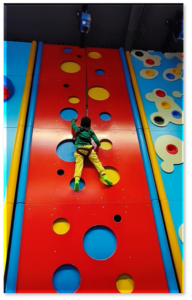
Parents or guardians should ensure the safety of the children while at the facilities by: –
- Ensure that activities are age appropriate, this information is available when registering and some of the facilities requires supervision by parents on children below 5 years.
- Avoid loose closing that might be entangled in moving machinery parts.
Look out for safety signages including fire and emergency exits
- Ensure adherence to limitation on height and weight. Weighing scales and height measurement services are provided as a control.
- Ensure physical build up of a person does not compromise safety by having belted up loosely.
- Close supervision, always keeping close eye on the children. Children have been lost in amusement parks never to be found.
Proprietors of the facilities must ensure: –
- Compliance with regulation and industry best practices.
- Installations should be undertaken by competent personnel following the manufacture recommendations factoring in load distribution.
- Planned maintenance should be performed at recommended intervals by manufacturer while adhering to standard operating including application of Lock Out Tag Out to prevent inadvertent starting of machines.
- Pre inspection of the machine, tools and equipment prior to starting the machine to identify and address potential hazards including missing component, wear and tear while ensuring all safety components are functional.
- Pre Inspection of the children prior to start the machine to ensure they are buckled up as required, harnesses are appropriately worn while ensuring safety components are functional.
- Close supervision by facility staff to ensure children are not engaging in risky manoeuvres.
- Training and awareness of the staff on operation of the rides including controls and how to respond to emergencies are vital. Lives have been lost due to inadequate emergency preparedness which results to panic confusion and stampedes.
- Facility should be adequately prepared to respond to emergencies including provision of emergency response equipment including first aid kit and fire extinguishers in addition to prominently displaying emergency exits, trained first aiders and fire marshals.
- Provision of designated sanitary facilities that are age appropriate.
- Provision of lockable lockers to ensure safety of personal valuables.
- Adherence to food safety handling protocols to prevent food poisoning.
- Weather monitoring to prevent been caught up in extreme weather that can result to fatalities and injuries.
Standards
1. Kenya Bureau of Standards KS 2948
- KS 2948-1:2022 Safe play environment for children – Guidelines Part 1: General playground considerations
- KS 2948-3:2023 Safe play environment for children – Guidelines Part 3: Maintaining a playground
- Safe play environment for children – Guidelines Part 2: Playground hazards
- KS 2948-4:2023 Safe play environment for children – Guidelines Part 4: Parts of the playground
- KS ISO 8124-4:2014 Specifies requirements and test methods for activity toys for domestic family use intended for children under 14 years to play on or in.
2. Safety Standards Manual for schools in Kenya CWS-SSZ-Schools-Manual_Kenya.pdf
3. National fire Protection Association NFPA 101, Life Safety Code (2024)
4. ASTM F2291-23 Standard Practice for Design of Amusement Rides and Devices The purpose of this practice is to provide designers, engineers, manufacturers, owners, and operators with criteria and references for use in designing amusement rides and devices or a major modification for amusement rides or devices.
5. ASTM F1487-21: Standard Consumer Safety Performance Specification for Playground Equipment for Public Use
6. ASTM F2373-11(2017) Standard Consumer Safety Performance Specification for Public Use Play Equipment for Children 6 Months through 23 Months
7. BS EN 13814-1:2019+A1:2024Safety of amusement rides and amusement devices – Design and manufacture
8. EN 71:Safety requirements for Toys
Part 1 Safety of toys. Mechanical and physical properties
Part 2 Safety of toys. Flammability
Part 3 Safety of toys. Specification for migration of certain elements
Part 4 Safety of toys. Experimental sets for chemistry and related activities
Part 5 Safety of toys. Chemical toys (sets) other than experimental sets
Part 6 Safety of toys. Graphical symbols for age warning labelling
Part 7 Safety of toys. Finger paints. Requirements and test methods
Part 8 Safety of toys. Swings, slides and similar activity toys for indoor and outdoor family domestic use
Part 9 Safety of toys. Organic chemical compounds. Requirements
Part 10 Safety of toys. Organic chemical compounds. Sample preparation and extraction
Part 11 Safety of toys. Organic chemical compounds. Methods of analysis
Part 12 Safety of toys. N-Nitrosamines and N-nitrosatable substances
Part 13 Safety of toys. Olfactory board games, cosmetic kits and gustative games
Part 14 Safety of toys. Trampolines for domestic use
Part 15 Safety of toys. Formamide in foam toy materials (content)
Part 16 Safety of toys. Certain chlorinated phosphorus flame retardants (TCEP, TCPP, TDCP) in toy materials
Part 17 Safety of toys. Certain isothiazolinones (MIT, CIT, BIT) in aqueous toy materials
Part 18 Safety of toys. Phenol in aqueous (content) and polymeric (migration) toy materials
Part 19 Safety of toys. Migration of bisphenol A from toy materials
